•  
Maha Kumbh Mela - India

Maha Kumbh Mela - India

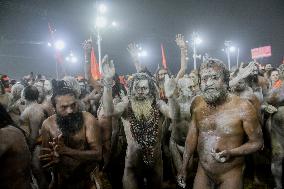
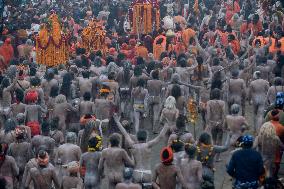
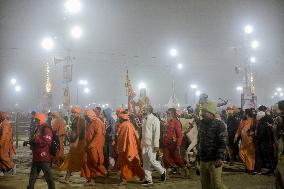
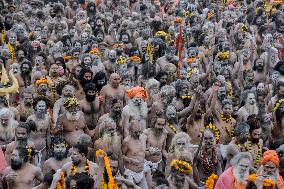
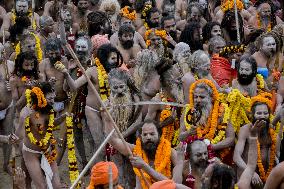
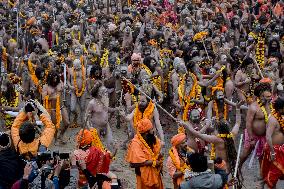
Hindu pilgrims arrive to take a holy dip in the sacred waters of Sangam, the confluence of the Ganges, Yamuna, and mythical Saraswati rivers, during the Maha Kumbh Mela festival in Prayagraj on January 16, 2025. Millions of devotees throng Prayagraj to take holy dip in the holy river to cleanse themselves of all sins. Photo by Indranil Aditya/Middle East Images/ABACAPRESS.COM

  •  
Maha Kumbh Mela - India

Maha Kumbh Mela - India

Hindu pilgrims arrive to take a holy dip in the sacred waters of Sangam, the confluence of the Ganges, Yamuna, and mythical Saraswati rivers, during the Maha Kumbh Mela festival in Prayagraj on January 16, 2025. Millions of devotees throng Prayagraj to take holy dip in the holy river to cleanse themselves of all sins. Photo by Indranil Aditya/Middle East Images/ABACAPRESS.COM

  •  
Maha Kumbh Mela - India

Maha Kumbh Mela - India

A worker is seen operating trash skimmers, on the river as the Hindu pilgrims arrive to take a holy dip in the sacred waters of Sangam, the confluence of the Ganges, Yamuna, and mythical Saraswati rivers, during the Maha Kumbh Mela festival in Prayagraj on January 16, 2025. Millions of devotees throng Prayagraj to take holy dip in the holy river to cleanse themselves of all sins. Photo by Indranil Aditya/Middle East Images/ABACAPRESS.COM

  •  
Maha Kumbh Mela - India

Maha Kumbh Mela - India

A worker is seen operating trash skimmers, on the river as the Hindu pilgrims arrive to take a holy dip in the sacred waters of Sangam, the confluence of the Ganges, Yamuna, and mythical Saraswati rivers, during the Maha Kumbh Mela festival in Prayagraj on January 16, 2025. Millions of devotees throng Prayagraj to take holy dip in the holy river to cleanse themselves of all sins. Photo by Indranil Aditya/Middle East Images/ABACAPRESS.COM

  •  
Maha Kumbh Mela - India

Maha Kumbh Mela - India

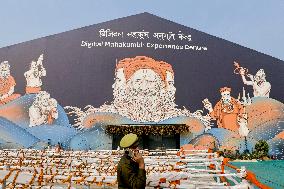
A police personnel is seen in front of Digital Maha Kumbh Experience centre built for Hindu pilgrims who arrive to take a holy dip in the sacred waters of Sangam, the confluence of the Ganges, Yamuna, and mythical Saraswati rivers, during the Maha Kumbh Mela festival in Prayagraj on January 16, 2025. Millions of devotees throng Prayagraj to take holy dip in the holy river to cleanse themselves of all sins. Photo by Indranil Aditya/Middle East Images/ABACAPRESS.COM

  •  
Maha Kumbh Mela - India

Maha Kumbh Mela - India

Hindu pilgrims walk past a poster of Uttar Pradesh Chief Minister Yogi Adityanath and Indian Prime Minister, Narendra Modi, as they come to take a holy dip in the sacred waters of Sangam, the confluence of the Ganges, Yamuna, and mythical Saraswati rivers, during the Maha Kumbh Mela festival in Prayagraj on January 16, 2025. Millions of devotees throng Prayagraj to take holy dip in the holy river to cleanse themselves of all sins. Photo by Indranil Aditya/Middle East Images/ABACAPRESS.COM

  •  
Maha Kumbh Mela - India

Maha Kumbh Mela - India

A Hindu pilgrim sleeps on a roadside area, as he arrives to take a holy dip in the sacred waters of Sangam, the confluence of the Ganges, Yamuna, and mythical Saraswati rivers, during the Maha Kumbh Mela festival in Prayagraj on January 16, 2025. Millions of devotees throng Prayagraj to take holy dip in the holy river to cleanse themselves of all sins. Photo by Indranil Aditya/Middle East Images/ABACAPRESS.COM

  •  
Maha Kumbh Mela 2025 - India

Maha Kumbh Mela 2025 - India

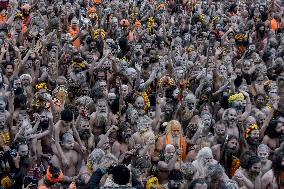
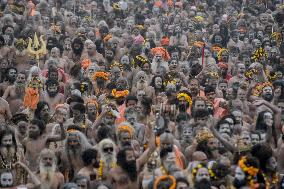
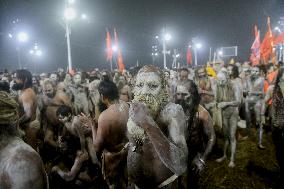
Hindu pilgrims arrive to take a holy dip in the sacred waters of Sangam, the confluence of the Ganges, Yamuna, and mythical Saraswati rivers, during the Maha Kumbh Mela festival in Prayagraj on January 14, 2025. Vast crowds of Hindu pilgrims in India began bathing in sacred waters on January 14, as the Kumbh Mela festival opened, with organizers expecting 400 million people . Photo by Indranil Aditya/Middle East Images/ABACAPRESS.COM

  •  
Maha Kumbh Mela 2025 - India

Maha Kumbh Mela 2025 - India

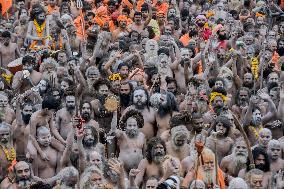
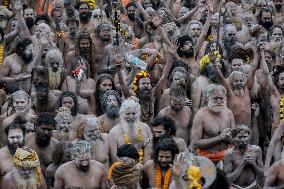
Hindu pilgrims arrive to take a holy dip in the sacred waters of Sangam, the confluence of the Ganges, Yamuna, and mythical Saraswati rivers, during the Maha Kumbh Mela festival in Prayagraj on January 14, 2025. Vast crowds of Hindu pilgrims in India began bathing in sacred waters on January 14, as the Kumbh Mela festival opened, with organizers expecting 400 million people . Photo by Indranil Aditya/Middle East Images/ABACAPRESS.COM

  •  
Maha Kumbh Mela 2025 - India

Maha Kumbh Mela 2025 - India

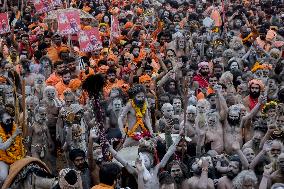
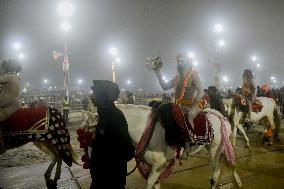
Hindu pilgrims arrive to take a holy dip in the sacred waters of Sangam, the confluence of the Ganges, Yamuna, and mythical Saraswati rivers, during the Maha Kumbh Mela festival in Prayagraj on January 14, 2025. Vast crowds of Hindu pilgrims in India began bathing in sacred waters on January 14, as the Kumbh Mela festival opened, with organizers expecting 400 million people . Photo by Indranil Aditya/Middle East Images/ABACAPRESS.COM

  •  
Maha Kumbh Mela 2025 - India

Maha Kumbh Mela 2025 - India

Hindu pilgrims arrive to take a holy dip in the sacred waters of Sangam, the confluence of the Ganges, Yamuna, and mythical Saraswati rivers, during the Maha Kumbh Mela festival in Prayagraj on January 14, 2025. Vast crowds of Hindu pilgrims in India began bathing in sacred waters on January 14, as the Kumbh Mela festival opened, with organizers expecting 400 million people . Photo by Indranil Aditya/Middle East Images/ABACAPRESS.COM

  •  
Maha Kumbh Mela 2025 - India

Maha Kumbh Mela 2025 - India

Hindu pilgrims arrive to take a holy dip in the sacred waters of Sangam, the confluence of the Ganges, Yamuna, and mythical Saraswati rivers, during the Maha Kumbh Mela festival in Prayagraj on January 14, 2025. Vast crowds of Hindu pilgrims in India began bathing in sacred waters on January 14, as the Kumbh Mela festival opened, with organizers expecting 400 million people . Photo by Indranil Aditya/Middle East Images/ABACAPRESS.COM

  •  
Maha Kumbh Mela 2025 - India

Maha Kumbh Mela 2025 - India

Hindu pilgrims arrive to take a holy dip in the sacred waters of Sangam, the confluence of the Ganges, Yamuna, and mythical Saraswati rivers, during the Maha Kumbh Mela festival in Prayagraj on January 14, 2025. Vast crowds of Hindu pilgrims in India began bathing in sacred waters on January 14, as the Kumbh Mela festival opened, with organizers expecting 400 million people . Photo by Indranil Aditya/Middle East Images/ABACAPRESS.COM

  •  
Maha Kumbh Mela 2025 - India

Maha Kumbh Mela 2025 - India

Hindu pilgrims arrive to take a holy dip in the sacred waters of Sangam, the confluence of the Ganges, Yamuna, and mythical Saraswati rivers, during the Maha Kumbh Mela festival in Prayagraj on January 14, 2025. Vast crowds of Hindu pilgrims in India began bathing in sacred waters on January 14, as the Kumbh Mela festival opened, with organizers expecting 400 million people . Photo by Indranil Aditya/Middle East Images/ABACAPRESS.COM

  •  
Maha Kumbh Mela 2025 - India

Maha Kumbh Mela 2025 - India

Hindu pilgrims arrive to take a holy dip in the sacred waters of Sangam, the confluence of the Ganges, Yamuna, and mythical Saraswati rivers, during the Maha Kumbh Mela festival in Prayagraj on January 14, 2025. Vast crowds of Hindu pilgrims in India began bathing in sacred waters on January 14, as the Kumbh Mela festival opened, with organizers expecting 400 million people . Photo by Indranil Aditya/Middle East Images/ABACAPRESS.COM

  •  
Maha Kumbh Mela 2025 - India

Maha Kumbh Mela 2025 - India

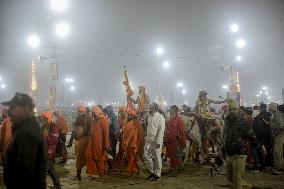
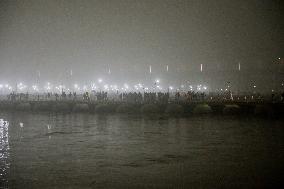
Hindu pilgrims carrying their belongings walk over floating pontoon bridges to go to Sangam, the confluence of the Ganges, Yamuna, and mythical Saraswati rivers, on a foggy winter evening to take part in the Maha Kumbh Mela festival in Prayagraj on January 12, 2025. The millennia-old Kumbh Mela, a sacred show of religious piety and ritual bathing that opens January 13, is held at the site where the holy Ganges, Yamuna, and the mythical Saraswati rivers meet. . Photo by Indranil Aditya/Middle East Images/ABACAPRESS.COM

  •  
Maha Kumbh Mela 2025 - India

Maha Kumbh Mela 2025 - India

Hindu pilgrims arrive to take a holy dip in the sacred waters of Sangam, the confluence of the Ganges, Yamuna, and mythical Saraswati rivers, during the Maha Kumbh Mela festival in Prayagraj on January 14, 2025. Vast crowds of Hindu pilgrims in India began bathing in sacred waters on January 14, as the Kumbh Mela festival opened, with organizers expecting 400 million people . Photo by Indranil Aditya/Middle East Images/ABACAPRESS.COM

  •  
Maha Kumbh Mela 2025 - India

Maha Kumbh Mela 2025 - India

Hindu pilgrims arrive to take a holy dip in the sacred waters of Sangam, the confluence of the Ganges, Yamuna, and mythical Saraswati rivers, during the Maha Kumbh Mela festival in Prayagraj on January 14, 2025. Vast crowds of Hindu pilgrims in India began bathing in sacred waters on January 14, as the Kumbh Mela festival opened, with organizers expecting 400 million people . Photo by Indranil Aditya/Middle East Images/ABACAPRESS.COM

  •  
Maha Kumbh Mela 2025 - India

Maha Kumbh Mela 2025 - India

Hindu pilgrims arrive to take a holy dip in the sacred waters of Sangam, the confluence of the Ganges, Yamuna, and mythical Saraswati rivers, during the Maha Kumbh Mela festival in Prayagraj on January 14, 2025. Vast crowds of Hindu pilgrims in India began bathing in sacred waters on January 14, as the Kumbh Mela festival opened, with organizers expecting 400 million people . Photo by Indranil Aditya/Middle East Images/ABACAPRESS.COM

  •  
Maha Kumbh Mela 2025 - India

Maha Kumbh Mela 2025 - India

Hindu pilgrims arrive to take a holy dip in the sacred waters of Sangam, the confluence of the Ganges, Yamuna, and mythical Saraswati rivers, during the Maha Kumbh Mela festival in Prayagraj on January 14, 2025. Vast crowds of Hindu pilgrims in India began bathing in sacred waters on January 14, as the Kumbh Mela festival opened, with organizers expecting 400 million people . Photo by Indranil Aditya/Middle East Images/ABACAPRESS.COM

  •  
Maha Kumbh Mela 2025 - India

Maha Kumbh Mela 2025 - India

Hindu pilgrims arrive to take a holy dip in the sacred waters of Sangam, the confluence of the Ganges, Yamuna, and mythical Saraswati rivers, during the Maha Kumbh Mela festival in Prayagraj on January 14, 2025. Vast crowds of Hindu pilgrims in India began bathing in sacred waters on January 14, as the Kumbh Mela festival opened, with organizers expecting 400 million people . Photo by Indranil Aditya/Middle East Images/ABACAPRESS.COM

  •  
Maha Kumbh Mela 2025 - India

Maha Kumbh Mela 2025 - India

Hindu pilgrims arrive to take a holy dip in the sacred waters of Sangam, the confluence of the Ganges, Yamuna, and mythical Saraswati rivers, during the Maha Kumbh Mela festival in Prayagraj on January 14, 2025. Vast crowds of Hindu pilgrims in India began bathing in sacred waters on January 14, as the Kumbh Mela festival opened, with organizers expecting 400 million people . Photo by Indranil Aditya/Middle East Images/ABACAPRESS.COM

  •  
Maha Kumbh Mela 2025 - India

Maha Kumbh Mela 2025 - India

Hindu pilgrims arrive to take a holy dip in the sacred waters of Sangam, the confluence of the Ganges, Yamuna, and mythical Saraswati rivers, during the Maha Kumbh Mela festival in Prayagraj on January 14, 2025. Vast crowds of Hindu pilgrims in India began bathing in sacred waters on January 14, as the Kumbh Mela festival opened, with organizers expecting 400 million people . Photo by Indranil Aditya/Middle East Images/ABACAPRESS.COM

  •  
Maha Kumbh Mela 2025 - India

Maha Kumbh Mela 2025 - India

Hindu pilgrims arrive to take a holy dip in the sacred waters of Sangam, the confluence of the Ganges, Yamuna, and mythical Saraswati rivers, during the Maha Kumbh Mela festival in Prayagraj on January 14, 2025. Vast crowds of Hindu pilgrims in India began bathing in sacred waters on January 14, as the Kumbh Mela festival opened, with organizers expecting 400 million people . Photo by Indranil Aditya/Middle East Images/ABACAPRESS.COM

  •  
Maha Kumbh Mela 2025 - India

Maha Kumbh Mela 2025 - India

Hindu pilgrims arrive to take a holy dip in the sacred waters of Sangam, the confluence of the Ganges, Yamuna, and mythical Saraswati rivers, during the Maha Kumbh Mela festival in Prayagraj on January 14, 2025. Vast crowds of Hindu pilgrims in India began bathing in sacred waters on January 14, as the Kumbh Mela festival opened, with organizers expecting 400 million people . Photo by Indranil Aditya/Middle East Images/ABACAPRESS.COM

  •  
Hindu festival in India

Hindu festival in India

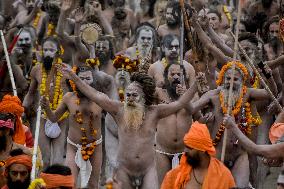
ALLAHABAD, India - Sadhus, or ascetics, bathe near the confluence of the Ganges and Yamuna River during the holy Hindu festival of Kumbh Mela, in Allahabad, northern India, on Feb. 10, 2013.

  •  
CHINA-SICHUAN-MOUNT EMEI-WORLD HERITAGE (CN)

CHINA-SICHUAN-MOUNT EMEI-WORLD HERITAGE (CN)

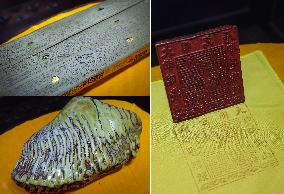
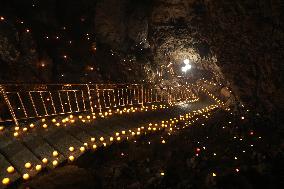
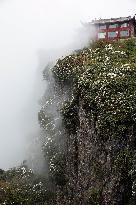
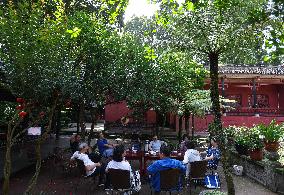
(220609) -- CHENGDU, June 9, 2022 (Xinhua) -- Combo photo shows cultural relics of Mount Emei in southwest China's Sichuan Province, June 6, 2022. Mount Emei, located in southwest China's Sichuan Province, is an area of striking scenic beauty, notable for its lofty mountain and lush vegetation. It is also of great spiritual and cultural significance, in which there are archaeological sites, important architecture, tombs, ritual spaces, and collections of cultural artefacts, including sculpture, stone inscriptions, calligraphy, and paintings, among other traditional arts. Mount Emei is known as one of the four holy mountains of Chinese Buddhism. Carved out of a hillside in the 8th century, the Leshan Giant Buddha is an area of natural beauty into which the human element has been integrated with skill and subtlety. Facing the confluence of the Minjiang, Dadu and Qingyi rivers, the 71 meters tall Giant Buddha of Leshan is one of the most important cultural treasures of China. With its natural and cultural

  •  
CHINA-SICHUAN-MOUNT EMEI-WORLD HERITAGE (CN)

CHINA-SICHUAN-MOUNT EMEI-WORLD HERITAGE (CN)

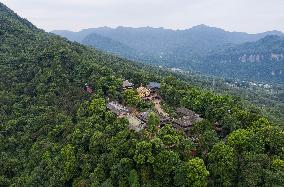
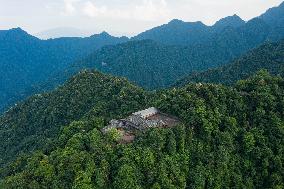
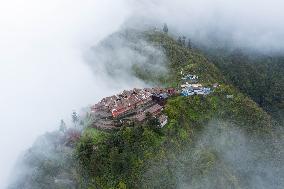
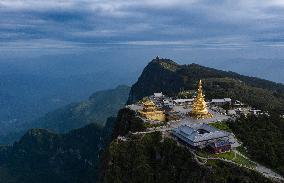
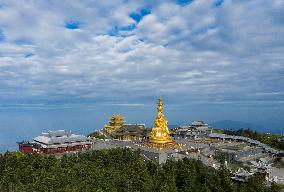
(220609) -- CHENGDU, June 9, 2022 (Xinhua) -- Aerial photo taken on June 6, 2022 shows the scenery of Mount Emei in southwest China's Sichuan Province. Mount Emei, located in southwest China's Sichuan Province, is an area of striking scenic beauty, notable for its lofty mountain and lush vegetation. It is also of great spiritual and cultural significance, in which there are archaeological sites, important architecture, tombs, ritual spaces, and collections of cultural artefacts, including sculpture, stone inscriptions, calligraphy, and paintings, among other traditional arts. Mount Emei is known as one of the four holy mountains of Chinese Buddhism. Carved out of a hillside in the 8th century, the Leshan Giant Buddha is an area of natural beauty into which the human element has been integrated with skill and subtlety. Facing the confluence of the Minjiang, Dadu and Qingyi rivers, the 71 meters tall Giant Buddha of Leshan is one of the most important cultural treasures of China. With its natural and cult

  •  
CHINA-SICHUAN-MOUNT EMEI-WORLD HERITAGE (CN)

CHINA-SICHUAN-MOUNT EMEI-WORLD HERITAGE (CN)

(220609) -- CHENGDU, June 9, 2022 (Xinhua) -- Aerial photo taken on June 7, 2022 shows the scenery of Mount Emei in southwest China's Sichuan Province. Mount Emei, located in southwest China's Sichuan Province, is an area of striking scenic beauty, notable for its lofty mountain and lush vegetation. It is also of great spiritual and cultural significance, in which there are archaeological sites, important architecture, tombs, ritual spaces, and collections of cultural artefacts, including sculpture, stone inscriptions, calligraphy, and paintings, among other traditional arts. Mount Emei is known as one of the four holy mountains of Chinese Buddhism. Carved out of a hillside in the 8th century, the Leshan Giant Buddha is an area of natural beauty into which the human element has been integrated with skill and subtlety. Facing the confluence of the Minjiang, Dadu and Qingyi rivers, the 71 meters tall Giant Buddha of Leshan is one of the most important cultural treasures of China. With its natural and cult

  •  
CHINA-SICHUAN-MOUNT EMEI-WORLD HERITAGE (CN)

CHINA-SICHUAN-MOUNT EMEI-WORLD HERITAGE (CN)

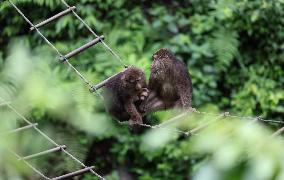
(220609) -- CHENGDU, June 9, 2022 (Xinhua) -- Monkeys are seen at Mount Emei in southwest China's Sichuan Province, June 5, 2022. Mount Emei, located in southwest China's Sichuan Province, is an area of striking scenic beauty, notable for its lofty mountain and lush vegetation. It is also of great spiritual and cultural significance, in which there are archaeological sites, important architecture, tombs, ritual spaces, and collections of cultural artefacts, including sculpture, stone inscriptions, calligraphy, and paintings, among other traditional arts. Mount Emei is known as one of the four holy mountains of Chinese Buddhism. Carved out of a hillside in the 8th century, the Leshan Giant Buddha is an area of natural beauty into which the human element has been integrated with skill and subtlety. Facing the confluence of the Minjiang, Dadu and Qingyi rivers, the 71 meters tall Giant Buddha of Leshan is one of the most important cultural treasures of China. With its natural and cultural values well inter

  •  
CHINA-SICHUAN-MOUNT EMEI-WORLD HERITAGE (CN)

CHINA-SICHUAN-MOUNT EMEI-WORLD HERITAGE (CN)

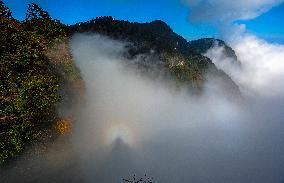
(220609) -- CHENGDU, June 9, 2022 (Xinhua) -- Photo taken on Oct. 18, 2015 shows the scenery of Mount Emei in southwest China's Sichuan Province. Mount Emei, located in southwest China's Sichuan Province, is an area of striking scenic beauty, notable for its lofty mountain and lush vegetation. It is also of great spiritual and cultural significance, in which there are archaeological sites, important architecture, tombs, ritual spaces, and collections of cultural artefacts, including sculpture, stone inscriptions, calligraphy, and paintings, among other traditional arts. Mount Emei is known as one of the four holy mountains of Chinese Buddhism. Carved out of a hillside in the 8th century, the Leshan Giant Buddha is an area of natural beauty into which the human element has been integrated with skill and subtlety. Facing the confluence of the Minjiang, Dadu and Qingyi rivers, the 71 meters tall Giant Buddha of Leshan is one of the most important cultural treasures of China. With its natural and cultural v

  •  
CHINA-SICHUAN-MOUNT EMEI-WORLD HERITAGE (CN)

CHINA-SICHUAN-MOUNT EMEI-WORLD HERITAGE (CN)

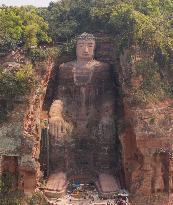
(220609) -- CHENGDU, June 9, 2022 (Xinhua) -- Aerial photo taken on March 29, 2019 shows the Leshan Giant Buddha in southwest China's Sichuan Province. Mount Emei, located in southwest China's Sichuan Province, is an area of striking scenic beauty, notable for its lofty mountain and lush vegetation. It is also of great spiritual and cultural significance, in which there are archaeological sites, important architecture, tombs, ritual spaces, and collections of cultural artefacts, including sculpture, stone inscriptions, calligraphy, and paintings, among other traditional arts. Mount Emei is known as one of the four holy mountains of Chinese Buddhism. Carved out of a hillside in the 8th century, the Leshan Giant Buddha is an area of natural beauty into which the human element has been integrated with skill and subtlety. Facing the confluence of the Minjiang, Dadu and Qingyi rivers, the 71 meters tall Giant Buddha of Leshan is one of the most important cultural treasures of China. With its natural and cult

  •  
CHINA-SICHUAN-MOUNT EMEI-WORLD HERITAGE (CN)

CHINA-SICHUAN-MOUNT EMEI-WORLD HERITAGE (CN)

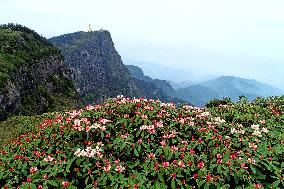
(220609) -- CHENGDU, June 9, 2022 (Xinhua) -- Photo taken on May 23, 2020 shows the scenery of Mount Emei in southwest China's Sichuan Province. Mount Emei, located in southwest China's Sichuan Province, is an area of striking scenic beauty, notable for its lofty mountain and lush vegetation. It is also of great spiritual and cultural significance, in which there are archaeological sites, important architecture, tombs, ritual spaces, and collections of cultural artefacts, including sculpture, stone inscriptions, calligraphy, and paintings, among other traditional arts. Mount Emei is known as one of the four holy mountains of Chinese Buddhism. Carved out of a hillside in the 8th century, the Leshan Giant Buddha is an area of natural beauty into which the human element has been integrated with skill and subtlety. Facing the confluence of the Minjiang, Dadu and Qingyi rivers, the 71 meters tall Giant Buddha of Leshan is one of the most important cultural treasures of China. With its natural and cultural va

  •  
CHINA-SICHUAN-MOUNT EMEI-WORLD HERITAGE (CN)

CHINA-SICHUAN-MOUNT EMEI-WORLD HERITAGE (CN)

(220609) -- CHENGDU, June 9, 2022 (Xinhua) -- Aerial photo taken on June 6, 2022 shows the scenery of Mount Emei in southwest China's Sichuan Province. Mount Emei, located in southwest China's Sichuan Province, is an area of striking scenic beauty, notable for its lofty mountain and lush vegetation. It is also of great spiritual and cultural significance, in which there are archaeological sites, important architecture, tombs, ritual spaces, and collections of cultural artefacts, including sculpture, stone inscriptions, calligraphy, and paintings, among other traditional arts. Mount Emei is known as one of the four holy mountains of Chinese Buddhism. Carved out of a hillside in the 8th century, the Leshan Giant Buddha is an area of natural beauty into which the human element has been integrated with skill and subtlety. Facing the confluence of the Minjiang, Dadu and Qingyi rivers, the 71 meters tall Giant Buddha of Leshan is one of the most important cultural treasures of China. With its natural and cult

  •  
CHINA-SICHUAN-MOUNT EMEI-WORLD HERITAGE (CN)

CHINA-SICHUAN-MOUNT EMEI-WORLD HERITAGE (CN)

(220609) -- CHENGDU, June 9, 2022 (Xinhua) -- Aerial photo taken on April 15, 2022 shows the scenery of Mount Emei in southwest China's Sichuan Province. Mount Emei, located in southwest China's Sichuan Province, is an area of striking scenic beauty, notable for its lofty mountain and lush vegetation. It is also of great spiritual and cultural significance, in which there are archaeological sites, important architecture, tombs, ritual spaces, and collections of cultural artefacts, including sculpture, stone inscriptions, calligraphy, and paintings, among other traditional arts. Mount Emei is known as one of the four holy mountains of Chinese Buddhism. Carved out of a hillside in the 8th century, the Leshan Giant Buddha is an area of natural beauty into which the human element has been integrated with skill and subtlety. Facing the confluence of the Minjiang, Dadu and Qingyi rivers, the 71 meters tall Giant Buddha of Leshan is one of the most important cultural treasures of China. With its natural and cu

  •  
CHINA-SICHUAN-MOUNT EMEI-WORLD HERITAGE (CN)

CHINA-SICHUAN-MOUNT EMEI-WORLD HERITAGE (CN)

(220609) -- CHENGDU, June 9, 2022 (Xinhua) -- Photo taken on June 5, 2022 shows the scenery of Mount Emei in southwest China's Sichuan Province. Mount Emei, located in southwest China's Sichuan Province, is an area of striking scenic beauty, notable for its lofty mountain and lush vegetation. It is also of great spiritual and cultural significance, in which there are archaeological sites, important architecture, tombs, ritual spaces, and collections of cultural artefacts, including sculpture, stone inscriptions, calligraphy, and paintings, among other traditional arts. Mount Emei is known as one of the four holy mountains of Chinese Buddhism. Carved out of a hillside in the 8th century, the Leshan Giant Buddha is an area of natural beauty into which the human element has been integrated with skill and subtlety. Facing the confluence of the Minjiang, Dadu and Qingyi rivers, the 71 meters tall Giant Buddha of Leshan is one of the most important cultural treasures of China. With its natural and cultural va

  •  
CHINA-SICHUAN-MOUNT EMEI-WORLD HERITAGE (CN)

CHINA-SICHUAN-MOUNT EMEI-WORLD HERITAGE (CN)

(220609) -- CHENGDU, June 9, 2022 (Xinhua) -- A monk is seen at Mount Emei in southwest China's Sichuan Province, May 18, 2022. Mount Emei, located in southwest China's Sichuan Province, is an area of striking scenic beauty, notable for its lofty mountain and lush vegetation. It is also of great spiritual and cultural significance, in which there are archaeological sites, important architecture, tombs, ritual spaces, and collections of cultural artefacts, including sculpture, stone inscriptions, calligraphy, and paintings, among other traditional arts. Mount Emei is known as one of the four holy mountains of Chinese Buddhism. Carved out of a hillside in the 8th century, the Leshan Giant Buddha is an area of natural beauty into which the human element has been integrated with skill and subtlety. Facing the confluence of the Minjiang, Dadu and Qingyi rivers, the 71 meters tall Giant Buddha of Leshan is one of the most important cultural treasures of China. With its natural and cultural values well interco

  •  
CHINA-SICHUAN-MOUNT EMEI-WORLD HERITAGE (CN)

CHINA-SICHUAN-MOUNT EMEI-WORLD HERITAGE (CN)

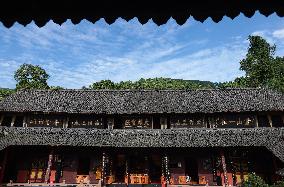
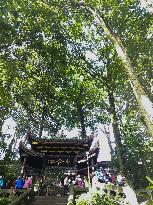
(220609) -- CHENGDU, June 9, 2022 (Xinhua) -- Aerial photo taken on June 7, 2022 shows the interior view of a temple at Mount Emei in southwest China's Sichuan Province. Mount Emei, located in southwest China's Sichuan Province, is an area of striking scenic beauty, notable for its lofty mountain and lush vegetation. It is also of great spiritual and cultural significance, in which there are archaeological sites, important architecture, tombs, ritual spaces, and collections of cultural artefacts, including sculpture, stone inscriptions, calligraphy, and paintings, among other traditional arts. Mount Emei is known as one of the four holy mountains of Chinese Buddhism. Carved out of a hillside in the 8th century, the Leshan Giant Buddha is an area of natural beauty into which the human element has been integrated with skill and subtlety. Facing the confluence of the Minjiang, Dadu and Qingyi rivers, the 71 meters tall Giant Buddha of Leshan is one of the most important cultural treasures of China. With it

  •  
CHINA-SICHUAN-MOUNT EMEI-WORLD HERITAGE (CN)

CHINA-SICHUAN-MOUNT EMEI-WORLD HERITAGE (CN)

(220609) -- CHENGDU, June 9, 2022 (Xinhua) -- Photo taken on April 15, 2022 shows the scenery of Mount Emei in southwest China's Sichuan Province. Mount Emei, located in southwest China's Sichuan Province, is an area of striking scenic beauty, notable for its lofty mountain and lush vegetation. It is also of great spiritual and cultural significance, in which there are archaeological sites, important architecture, tombs, ritual spaces, and collections of cultural artefacts, including sculpture, stone inscriptions, calligraphy, and paintings, among other traditional arts. Mount Emei is known as one of the four holy mountains of Chinese Buddhism. Carved out of a hillside in the 8th century, the Leshan Giant Buddha is an area of natural beauty into which the human element has been integrated with skill and subtlety. Facing the confluence of the Minjiang, Dadu and Qingyi rivers, the 71 meters tall Giant Buddha of Leshan is one of the most important cultural treasures of China. With its natural and cultural

  •  
CHINA-SICHUAN-MOUNT EMEI-WORLD HERITAGE (CN)

CHINA-SICHUAN-MOUNT EMEI-WORLD HERITAGE (CN)

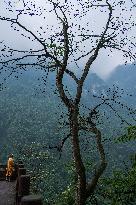
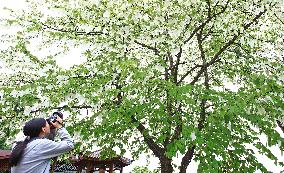
(220609) -- CHENGDU, June 9, 2022 (Xinhua) -- A tourist takes photos of a tree at the scenic area of Mount Emei in southwest China's Sichuan Province, April 17, 2020. Mount Emei, located in southwest China's Sichuan Province, is an area of striking scenic beauty, notable for its lofty mountain and lush vegetation. It is also of great spiritual and cultural significance, in which there are archaeological sites, important architecture, tombs, ritual spaces, and collections of cultural artefacts, including sculpture, stone inscriptions, calligraphy, and paintings, among other traditional arts. Mount Emei is known as one of the four holy mountains of Chinese Buddhism. Carved out of a hillside in the 8th century, the Leshan Giant Buddha is an area of natural beauty into which the human element has been integrated with skill and subtlety. Facing the confluence of the Minjiang, Dadu and Qingyi rivers, the 71 meters tall Giant Buddha of Leshan is one of the most important cultural treasures of China. With its n

  •  
CHINA-SICHUAN-MOUNT EMEI-WORLD HERITAGE (CN)

CHINA-SICHUAN-MOUNT EMEI-WORLD HERITAGE (CN)

(220609) -- CHENGDU, June 9, 2022 (Xinhua) -- Aerial photo taken on Jan. 11, 2021 shows the scenery of Mount Emei in southwest China's Sichuan Province. Mount Emei, located in southwest China's Sichuan Province, is an area of striking scenic beauty, notable for its lofty mountain and lush vegetation. It is also of great spiritual and cultural significance, in which there are archaeological sites, important architecture, tombs, ritual spaces, and collections of cultural artefacts, including sculpture, stone inscriptions, calligraphy, and paintings, among other traditional arts. Mount Emei is known as one of the four holy mountains of Chinese Buddhism. Carved out of a hillside in the 8th century, the Leshan Giant Buddha is an area of natural beauty into which the human element has been integrated with skill and subtlety. Facing the confluence of the Minjiang, Dadu and Qingyi rivers, the 71 meters tall Giant Buddha of Leshan is one of the most important cultural treasures of China. With its natural and cul

  •  
CHINA-SICHUAN-MOUNT EMEI-WORLD HERITAGE (CN)

CHINA-SICHUAN-MOUNT EMEI-WORLD HERITAGE (CN)

(220609) -- CHENGDU, June 9, 2022 (Xinhua) -- Tourists visit the scenic area of Mount Emei in southwest China's Sichuan Province, May 16, 2022. Mount Emei, located in southwest China's Sichuan Province, is an area of striking scenic beauty, notable for its lofty mountain and lush vegetation. It is also of great spiritual and cultural significance, in which there are archaeological sites, important architecture, tombs, ritual spaces, and collections of cultural artefacts, including sculpture, stone inscriptions, calligraphy, and paintings, among other traditional arts. Mount Emei is known as one of the four holy mountains of Chinese Buddhism. Carved out of a hillside in the 8th century, the Leshan Giant Buddha is an area of natural beauty into which the human element has been integrated with skill and subtlety. Facing the confluence of the Minjiang, Dadu and Qingyi rivers, the 71 meters tall Giant Buddha of Leshan is one of the most important cultural treasures of China. With its natural and cultural val

  •  
CHINA-SICHUAN-MOUNT EMEI-WORLD HERITAGE (CN)

CHINA-SICHUAN-MOUNT EMEI-WORLD HERITAGE (CN)

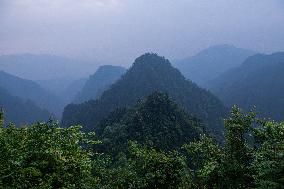
(220609) -- CHENGDU, June 9, 2022 (Xinhua) -- Aerial photo taken on May 24, 2022 shows the scenery of Mount Emei in southwest China's Sichuan Province. Mount Emei, located in southwest China's Sichuan Province, is an area of striking scenic beauty, notable for its lofty mountain and lush vegetation. It is also of great spiritual and cultural significance, in which there are archaeological sites, important architecture, tombs, ritual spaces, and collections of cultural artefacts, including sculpture, stone inscriptions, calligraphy, and paintings, among other traditional arts. Mount Emei is known as one of the four holy mountains of Chinese Buddhism. Carved out of a hillside in the 8th century, the Leshan Giant Buddha is an area of natural beauty into which the human element has been integrated with skill and subtlety. Facing the confluence of the Minjiang, Dadu and Qingyi rivers, the 71 meters tall Giant Buddha of Leshan is one of the most important cultural treasures of China. With its natural and cult

  •  
CHINA-SICHUAN-MOUNT EMEI-WORLD HERITAGE (CN)

CHINA-SICHUAN-MOUNT EMEI-WORLD HERITAGE (CN)

(220609) -- CHENGDU, June 9, 2022 (Xinhua) -- Tourists rest at the scenic area of Mount Emei in southwest China's Sichuan Province, June 7, 2022. Mount Emei, located in southwest China's Sichuan Province, is an area of striking scenic beauty, notable for its lofty mountain and lush vegetation. It is also of great spiritual and cultural significance, in which there are archaeological sites, important architecture, tombs, ritual spaces, and collections of cultural artefacts, including sculpture, stone inscriptions, calligraphy, and paintings, among other traditional arts. Mount Emei is known as one of the four holy mountains of Chinese Buddhism. Carved out of a hillside in the 8th century, the Leshan Giant Buddha is an area of natural beauty into which the human element has been integrated with skill and subtlety. Facing the confluence of the Minjiang, Dadu and Qingyi rivers, the 71 meters tall Giant Buddha of Leshan is one of the most important cultural treasures of China. With its natural and cultural v

  •  
CHINA-SICHUAN-MOUNT EMEI-WORLD HERITAGE (CN)

CHINA-SICHUAN-MOUNT EMEI-WORLD HERITAGE (CN)

(220609) -- CHENGDU, June 9, 2022 (Xinhua) -- Aerial photo taken on June 5, 2022 shows the scenery of Mount Emei in southwest China's Sichuan Province. Mount Emei, located in southwest China's Sichuan Province, is an area of striking scenic beauty, notable for its lofty mountain and lush vegetation. It is also of great spiritual and cultural significance, in which there are archaeological sites, important architecture, tombs, ritual spaces, and collections of cultural artefacts, including sculpture, stone inscriptions, calligraphy, and paintings, among other traditional arts. Mount Emei is known as one of the four holy mountains of Chinese Buddhism. Carved out of a hillside in the 8th century, the Leshan Giant Buddha is an area of natural beauty into which the human element has been integrated with skill and subtlety. Facing the confluence of the Minjiang, Dadu and Qingyi rivers, the 71 meters tall Giant Buddha of Leshan is one of the most important cultural treasures of China. With its natural and cult

  •  
CHINA-SICHUAN-MOUNT EMEI-WORLD HERITAGE (CN)

CHINA-SICHUAN-MOUNT EMEI-WORLD HERITAGE (CN)

(220609) -- CHENGDU, June 9, 2022 (Xinhua) -- Aerial photo taken on June 5, 2022 shows the scenery of Mount Emei in southwest China's Sichuan Province. Mount Emei, located in southwest China's Sichuan Province, is an area of striking scenic beauty, notable for its lofty mountain and lush vegetation. It is also of great spiritual and cultural significance, in which there are archaeological sites, important architecture, tombs, ritual spaces, and collections of cultural artefacts, including sculpture, stone inscriptions, calligraphy, and paintings, among other traditional arts. Mount Emei is known as one of the four holy mountains of Chinese Buddhism. Carved out of a hillside in the 8th century, the Leshan Giant Buddha is an area of natural beauty into which the human element has been integrated with skill and subtlety. Facing the confluence of the Minjiang, Dadu and Qingyi rivers, the 71 meters tall Giant Buddha of Leshan is one of the most important cultural treasures of China. With its natural and cult

  •  
CHINA-SICHUAN-MOUNT EMEI-WORLD HERITAGE (CN)

CHINA-SICHUAN-MOUNT EMEI-WORLD HERITAGE (CN)

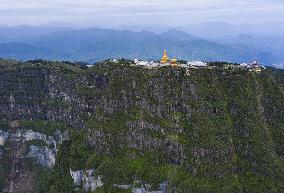
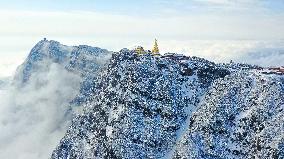
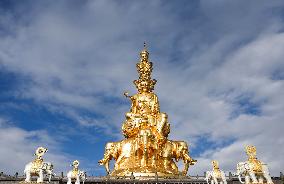
(220609) -- CHENGDU, June 9, 2022 (Xinhua) -- Aerial photo taken on June 5, 2022 shows a golden statue of Buddha at Mount Emei in southwest China's Sichuan Province. Mount Emei, located in southwest China's Sichuan Province, is an area of striking scenic beauty, notable for its lofty mountain and lush vegetation. It is also of great spiritual and cultural significance, in which there are archaeological sites, important architecture, tombs, ritual spaces, and collections of cultural artefacts, including sculpture, stone inscriptions, calligraphy, and paintings, among other traditional arts. Mount Emei is known as one of the four holy mountains of Chinese Buddhism. Carved out of a hillside in the 8th century, the Leshan Giant Buddha is an area of natural beauty into which the human element has been integrated with skill and subtlety. Facing the confluence of the Minjiang, Dadu and Qingyi rivers, the 71 meters tall Giant Buddha of Leshan is one of the most important cultural treasures of China. With its na

  •  
CHINA-SICHUAN-MOUNT EMEI-WORLD HERITAGE (CN)

CHINA-SICHUAN-MOUNT EMEI-WORLD HERITAGE (CN)

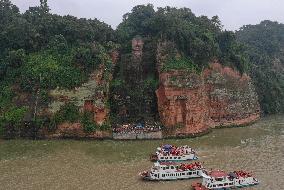
(220609) -- CHENGDU, June 9, 2022 (Xinhua) -- Aerial photo taken on Oct. 4, 2018 shows the Leshan Giant Buddha in southwest China's Sichuan Province. Mount Emei, located in southwest China's Sichuan Province, is an area of striking scenic beauty, notable for its lofty mountain and lush vegetation. It is also of great spiritual and cultural significance, in which there are archaeological sites, important architecture, tombs, ritual spaces, and collections of cultural artefacts, including sculpture, stone inscriptions, calligraphy, and paintings, among other traditional arts. Mount Emei is known as one of the four holy mountains of Chinese Buddhism. Carved out of a hillside in the 8th century, the Leshan Giant Buddha is an area of natural beauty into which the human element has been integrated with skill and subtlety. Facing the confluence of the Minjiang, Dadu and Qingyi rivers, the 71 meters tall Giant Buddha of Leshan is one of the most important cultural treasures of China. With its natural and cultur

  •  
CHINA-SICHUAN-MOUNT EMEI-WORLD HERITAGE (CN)

CHINA-SICHUAN-MOUNT EMEI-WORLD HERITAGE (CN)

(220609) -- CHENGDU, June 9, 2022 (Xinhua) -- Photo taken on May 19, 2022 shows the scenery of Mount Emei in southwest China's Sichuan Province. Mount Emei, located in southwest China's Sichuan Province, is an area of striking scenic beauty, notable for its lofty mountain and lush vegetation. It is also of great spiritual and cultural significance, in which there are archaeological sites, important architecture, tombs, ritual spaces, and collections of cultural artefacts, including sculpture, stone inscriptions, calligraphy, and paintings, among other traditional arts. Mount Emei is known as one of the four holy mountains of Chinese Buddhism. Carved out of a hillside in the 8th century, the Leshan Giant Buddha is an area of natural beauty into which the human element has been integrated with skill and subtlety. Facing the confluence of the Minjiang, Dadu and Qingyi rivers, the 71 meters tall Giant Buddha of Leshan is one of the most important cultural treasures of China. With its natural and cultural va

  •  
CHINA-SICHUAN-MOUNT EMEI-WORLD HERITAGE (CN)

CHINA-SICHUAN-MOUNT EMEI-WORLD HERITAGE (CN)

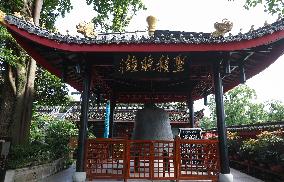
(220609) -- CHENGDU, June 9, 2022 (Xinhua) -- Photo taken on June 7, 2022 shows an ancient bell at Mount Emei in southwest China's Sichuan Province. Mount Emei, located in southwest China's Sichuan Province, is an area of striking scenic beauty, notable for its lofty mountain and lush vegetation. It is also of great spiritual and cultural significance, in which there are archaeological sites, important architecture, tombs, ritual spaces, and collections of cultural artefacts, including sculpture, stone inscriptions, calligraphy, and paintings, among other traditional arts. Mount Emei is known as one of the four holy mountains of Chinese Buddhism. Carved out of a hillside in the 8th century, the Leshan Giant Buddha is an area of natural beauty into which the human element has been integrated with skill and subtlety. Facing the confluence of the Minjiang, Dadu and Qingyi rivers, the 71 meters tall Giant Buddha of Leshan is one of the most important cultural treasures of China. With its natural and cultura

  • Main
  • Top
  • Editorial
  • Creative
  • About Us
  • About ILG
  • Terms of use
  • Company
  • BEHIND
  • Price List
  • Single Plan
  • Monthly Plan
  • Services
  • Shooting
  • Rights Clearance
  • Support
  • FAQ
  • How To Buy
  • Contact Us
  • Become a Partner

© KYODO NEWS IMAGES INC

All Rights Reserved.

  • Editorial
  • Olympics
  • News
  • Sports
  • Japan
  • Tech
  • Royal
  • Disaster
  • NorthKorea
  • Old Japan
  • SNS
  • Creative
  • Food
  • Japan
  • Landscape
  • Animal
  • Popular
  • #Ukraine
  • #China
  • #coronavirus
  • #N. Korea
  • #Thailand
  • #Russia
  • #Ukraine
  • #China
  • #coronavirus
  • #N. Korea
  • #Thailand
  • #Russia
  • Food
  • Japan
  • Landscape
  • Animal
  • Olympics
  • News
  • Sports
  • Japan
  • Tech
  • Royal
  • Disaster
  • NorthKorea
  • Old Japan
  • SNS